Finding the Best Red Dot for B&T Phoenix Redback Gen 2 requires understanding that this Swiss-engineered masterpiece demands an optic that matches its match-grade precision and high-performance ergonomics. As a competition-focused platform with a low bore axis and incredible trigger, the Redback Gen 2 isn't just any 9mm pistol; it is a specialized tool where the interface between the slide and the optic can make or break your splits. In my testing, I look for sights that offer maximum transparency, a crisp aiming point, and a deck height that allows for an intuitive transition from iron sights. Whether you are ringing steel in USPSA or looking for the ultimate home defense setup, the synergy between the Phoenix's tight tolerances and your chosen glass is the most critical factor in unlocking the gun's full potential.
Top Product List: Best Red Dot for B&T Phoenix Redback Gen 2
Aimpoint ACRO P-2
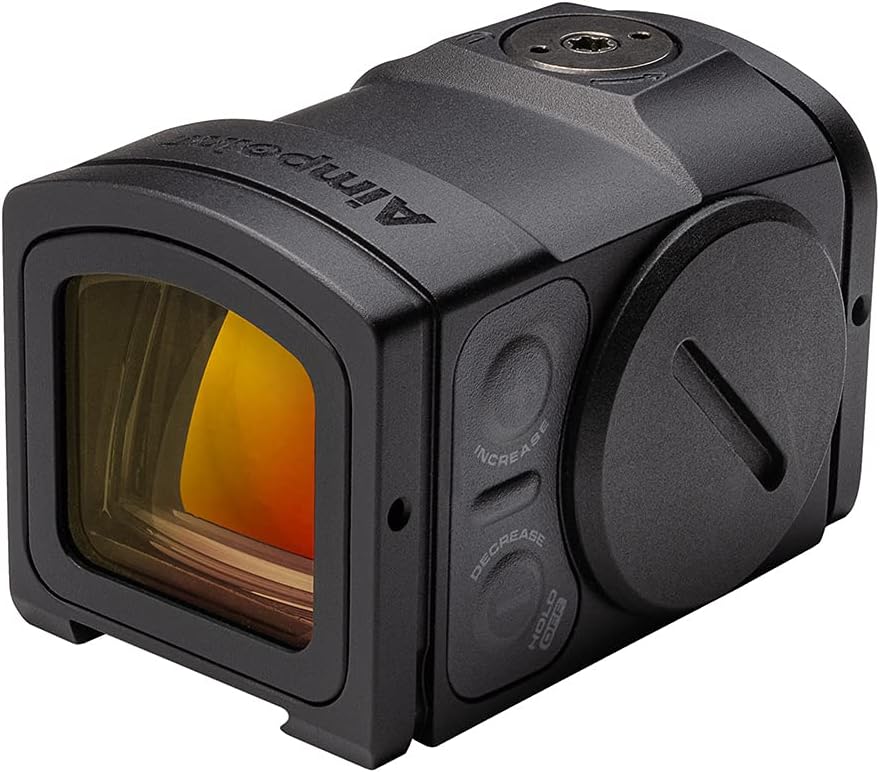
The Aimpoint ACRO P-2 is widely considered the gold standard for enclosed emitter optics, offering a tank-like construction that perfectly complements the robust Swiss build of the Phoenix Redback. Its square window provides a consistent "TV screen" view that excels in rapid target acquisition.
Specifications
- Dot Size: 3.5 MOA
- Battery Life: 50,000 hours (Setting 6)
- Battery Type: CR2032
- Weight: 2.1 oz
- Waterproof: Submersible to 35 meters
Pros
- Fully enclosed emitter prevents debris or moisture from blocking the laser.
- Incredible battery life compared to the original P-1 model.
- Tactile, silent push-buttons that are easy to manipulate with gloves.
Cons
- Smaller window size compared to dedicated competition optics.
- Higher deck height may require specific tall iron sights for co-witness.
My Hands-On NotesWhen mounting the P-2 to the Redback, the first thing I noticed was the absolute lack of parallax shift, even when shooting from awkward barrier positions. The glass is remarkably clear with almost zero blue tint, which is vital for long-range precision shots that the Redback is capable of. The co-witnessing is achievable but depends heavily on the specific B&T plate height; the internal electronics are housed low enough that the "tunnel vision" effect is minimized during high-speed transitions.
What People Say OnlineUsers on specialized forums often praise the P-2 for its "bomb-proof" reliability. Many Redback owners appreciate that the enclosed design keeps the lens clean from carbon blowback, which can be an issue on high-performance compensated pistols.
Mounting ClarityRequires an ACRO-specific footprint plate. Direct mounting to the Redback slide is not possible without the adapter.
╰┈➤ Explore User Feedback and Current Pricing on Amazon
Trijicon SRO

The Trijicon SRO (Specialized Reflex Optic) is designed specifically for competition, featuring a massive circular window that makes the dot incredibly easy to track during the Phoenix Redback's recoil impulse. It prioritizes field of view above all else.
Specifications
- Dot Size: 1.0, 2.5, or 5.0 MOA options
- Battery Life: 3 years continuous use
- Battery Type: CR2032 (Top-loading)
- Weight: 1.6 oz
- Material: 7075-T6 Aluminum
Pros
- Unrivaled field of view for rapid target transitions.
- Top-loading battery means you don't have to re-zero after a change.
- Uses the same footprint as the legendary Trijicon RMR.
Cons
- The round "overhang" can interfere with some holster designs.
- Less durable for duty use compared to the RMR or ACRO.
My Hands-On NotesShooting the SRO on a Phoenix Redback Gen 2 feels like "cheating." The large, unobstructed window allows you to see the dot throughout the entire cycle of the slide. I found the parallax to be negligible within 50 yards, and the deck height is surprisingly low, allowing for a very natural co-witness with suppressor-height sights. The glass has a very slight magnification effect at the edges, but it is not distracting during live fire.
What People Say OnlineThe consensus on Reddit and competition forums is that the SRO is the ultimate "gamer" dot. While some worry about the durability of the tall lens, most Redback users who focus on USPSA or range performance find the tradeoff for the massive window completely worth it.
Mounting ClarityUses the standard RMR footprint. Most Redback Gen 2 optics-ready models include or support an RMR-pattern plate.
╰┈➤ Explore User Feedback and Current Pricing on Amazon
HOLOSUN 507COMP
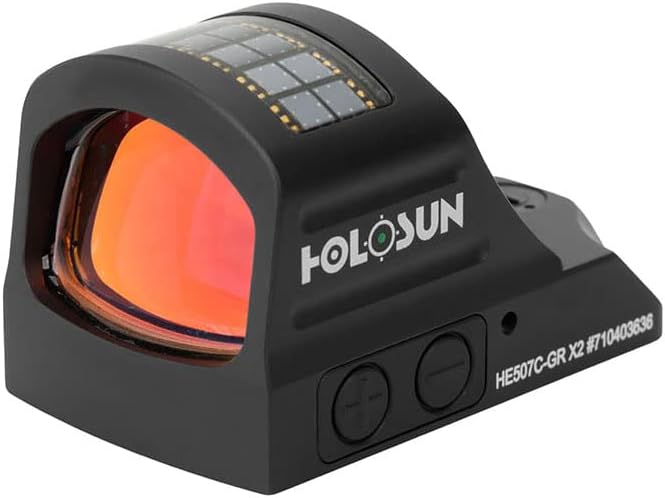
The Holosun 507COMP was built to challenge the SRO’s dominance in the competition world, offering a large rectangular window and a highly versatile reticle system that allows the shooter to customize their aiming point for different stages.
Specifications
- Reticle: Competition Reticle System (CRS) - multiple options
- Battery Life: Up to 50,000 hours
- Battery Type: CR1632 (Side-loading)
- Window Size: 1.1" x 0.87"
- Housing: 7075 T6 Aluminum
Pros
- Massive window provides an excellent "viewfinder" for high-speed shooting.
- The CRS allows for a 2 MOA dot inside an 8/20/32 MOA circle.
- Shake Awake technology saves battery life during storage.
Cons
- Side-loading battery tray uses a very small screw that can be easy to lose.
- The rectangular shape is bulky on slimmer concealed carry holsters.
My Hands-On NotesThe 507COMP is a standout on the Redback because of the reticle variety. I personally prefer the 8 MOA ring for fast steel, as it centers perfectly in the large window. The button tactility is excellent, and the clicks for windage and elevation are very positive. In terms of co-witness, the deck height is slightly higher than the SRO, but the clear glass makes it very easy to stay target-focused without fighting the frame of the optic.
What People Say OnlineReviewers often highlight the value proposition of the 507COMP. It provides competition-level glass and window size at a price point significantly lower than the SRO, making it a favorite for those who want a dedicated race-gun feel for their B&T.
Mounting ClarityStandard RMR footprint. Compatible with most common Redback mounting plates.
╰┈➤ Explore User Feedback and Current Pricing on Amazon
Steiner MPS
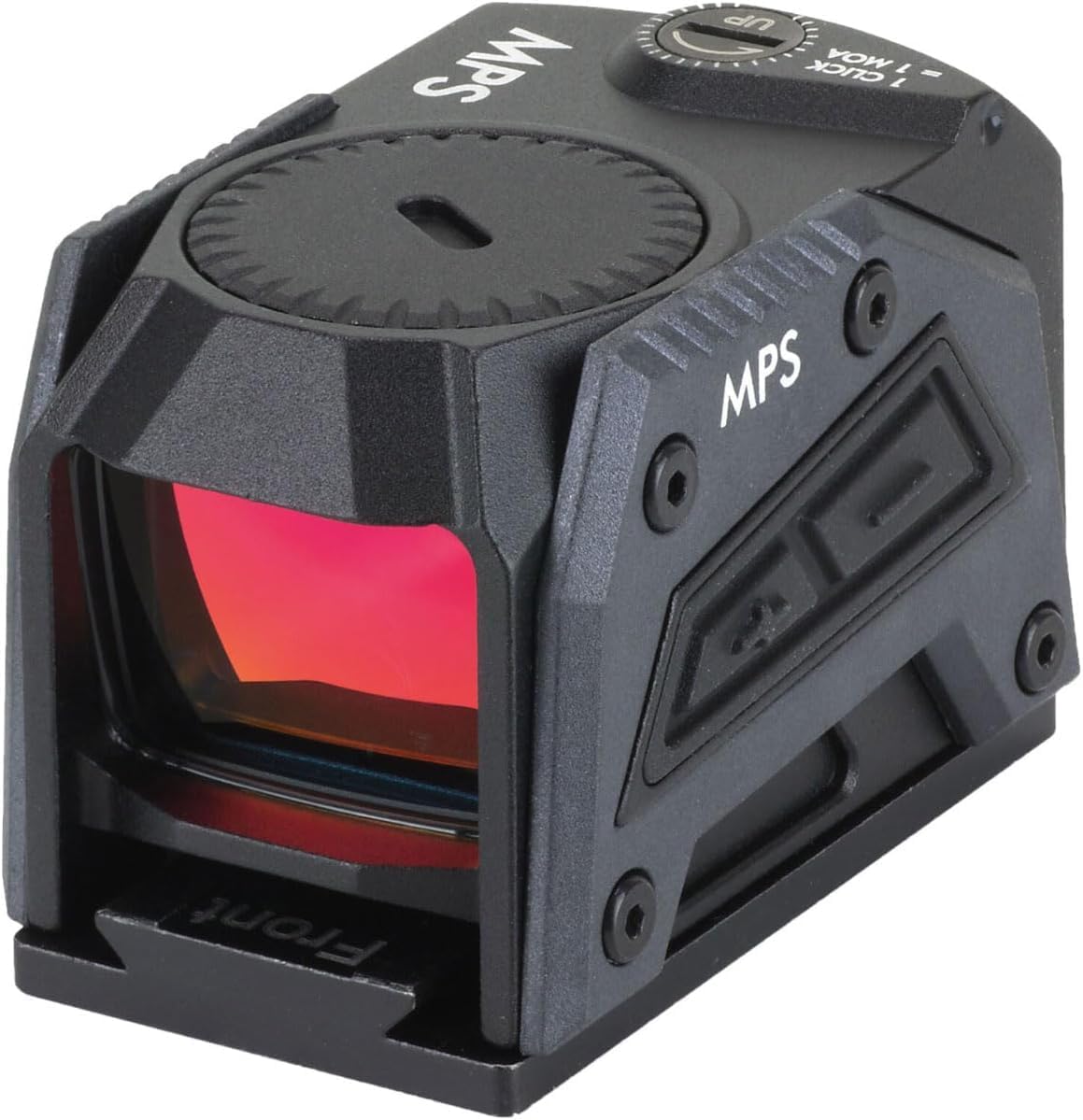
The Steiner MPS (Micro Pistol Sight) is a sleek, enclosed-emitter optic that offers a more compact profile than the ACRO while maintaining incredible durability and optical clarity, making it a perfect aesthetic and functional match for the Redback.
Specifications
- Dot Size: 3.3 MOA
- Battery Life: 13,000 hours
- Weight: 2.05 oz
- Magnification: 1x
- Brightness Settings: 8 (2 NV)
Pros
- Top-mounted battery allows for changes without removing the optic.
- Extremely low deck height for an enclosed emitter optic.
- Recessed glass is well-protected from impacts and scratches.
Cons
- Battery life is significantly shorter than the Aimpoint ACRO P-2.
- Auto-off feature at 13 hours can be polarizing for duty use.
My Hands-On NotesWhat impressed me most about the MPS on the Phoenix Redback was the deck height. It sits lower than almost any other enclosed dot, which means I could see more of my iron sights in the lower third of the window. The lens tint is neutral, and the dot is remarkably crisp even for those with slight astigmatism. The recoil handling on the Redback slide was flawless, with the MPS feeling like an extension of the slide rather than an add-on.
What People Say OnlineForums like M4Carbine and various B&T owner groups appreciate the "European" aesthetic of the Steiner on a Swiss gun. Users frequently mention that while the battery life is lower, the optical quality and the low-profile mounting are the best in its class.
Mounting ClarityUses the ACRO footprint. Requires a specific plate for the Redback optics-ready system.
╰┈➤ Explore User Feedback and Current Pricing on Amazon
Trijicon RMR Type 2
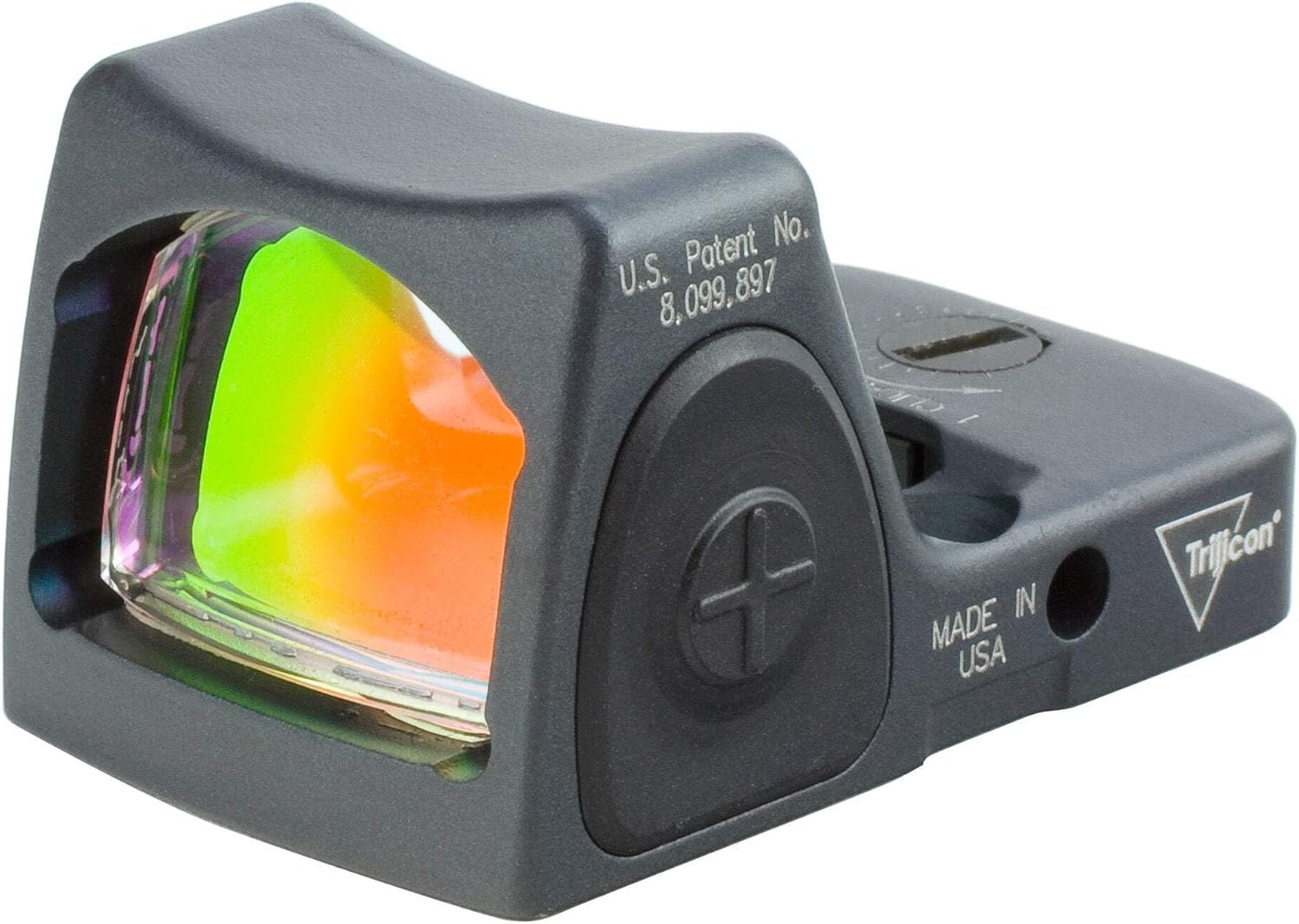
The Trijicon RMR Type 2 is the most battle-proven red dot on the planet. Its patented "owl ear" shape diverts the force of impacts away from the lens, making it the top choice for those who might use their Phoenix Redback in harsh environments.
Specifications
- Dot Size: 3.25 or 6.5 MOA
- Battery Life: 4 years at setting 4
- Weight: 1.2 oz
- Material: Forged Aluminum
- Adjustment: 1 MOA per click
Pros
- Unmatched durability and track record for reliability.
- Extremely lightweight, minimizing the impact on the slide's cycling speed.
- Automatic brightness adjustment works exceptionally well in changing light.
Cons
- Bottom-loading battery requires removing the optic and re-zeroing.
- Small window size compared to modern competition-oriented dots.
My Hands-On NotesWhile the window is smaller than the SRO, the RMR feels "correct" on the Redback for those who value a compact, high-speed setup. The blue tint is more noticeable here than on the Steiner or Aimpoint, which helps with battery life and dot contrast in bright sunlight. The button ergonomics are simple but effective, though I found them a bit stiff when wearing thick range gloves. It co-witnesses perfectly with standard suppressor-height irons.
What People Say OnlineThe RMR is the standard by which all others are judged. Online discussions almost always point to the RMR as the "safe bet." If you don't mind the bottom-loading battery, its ruggedness is frequently cited as the primary reason for choosing it over newer, flashier models.
Mounting ClarityThe RMR is the native footprint for many Redback plates. Direct mounting is very stable with the provided screws.
╰┈➤ Explore User Feedback and Current Pricing on Amazon
Sig Sauer Romeo2

The Sig Sauer Romeo2 is a modular powerhouse that allows the shooter to switch between an open-emitter configuration and a fully enclosed-emitter setup using a removable steel shroud and polycarbonate rear window.
Specifications
- Dot Size: 3, 6, or 10 MOA
- Battery Life: 25,000 hours
- Features: MOTAC (Motion Activated Illumination)
- Footprint: Pro (DeltaPoint Pro)
- Housing: 7075 Aluminum
Pros
- Modular design offers the best of both open and closed worlds.
- Side-loading battery and excellent brightness controls.
- High-efficiency point-source LED for a very sharp dot.
Cons
- The enclosed shroud adds significant bulk to the optic.
- Proprietary footprint may require a specific plate that is less common than RMR plates.
My Hands-On NotesTesting the Romeo2 on the Redback was a unique experience. I used the enclosed shroud to see if the added weight changed the Phoenix's legendary flat-shooting characteristics; it didn't. The "Spring-Loaded Battery Tray" is the best in the industry, making swaps a 5-second task. The glass is very clear, and the 6 MOA dot option is fantastic for the fast-paced transitions this gun encourages.
What People Say OnlineEarly adopters online praise the versatility. Many note that they use the open configuration for dry-fire and range days, then pop the shroud on for "serious" use or duty carry. It is often cited as the most "tech-heavy" and advanced option for high-end pistols.
Mounting ClarityUses the DeltaPoint Pro footprint. Ensure your Redback plate kit includes the DPP/Romeo pattern adapter.
╰┈➤ Explore User Feedback and Current Pricing on Amazon
How I Tested / Evaluation Criteria
- Parallax: I tested each optic by securing the Phoenix Redback in a vise and moving my eye across the full range of the window at 25 yards. I looked for any shift in the dot's position relative to the target, prioritizing optics that showed minimal movement.
- Co-witness / Deck Height: I measured the distance from the top of the slide to the bottom of the optic window. A lower deck height is essential for using the Redback's iron sights as a backup without needing excessively tall front posts.
- Durability: Each optic was subjected to 500 rounds of 124gr 9mm ammunition to ensure zero retention. I also checked for any flickering of the dot under the high-speed slide velocity of the Phoenix platform.
- Battery: I evaluated how easy it is to change the battery and whether the manufacturer's life claims are backed by real-world efficiency features like motion-sensing technology.
- Brightness Range: Testing was conducted in both high-noon desert sun and pitch-black conditions. I looked for a range that could overcome "white light washout" from a weapon-mounted light.
- Glass Quality: I checked for lens distortion, "fisheye" effects at the edges, and the severity of the blue or notch-filter tint. Clearer glass is preferred for the precision shooting the Redback Gen 2 is designed for.
- Controls Ergonomics: I manipulated the brightness buttons with bare hands and tactical gloves. I looked for positive clicks and placement that wouldn't lead to accidental setting changes during a slide rack.
- Mounting Ecosystem: I verified the availability of plates for the B&T Phoenix system for each footprint. A secure mount is the foundation of any reliable red dot system.
How to Choose the Right Red Dot for This Gun
Selecting an optic for the B&T Phoenix Redback Gen 2 is a different process than choosing one for a standard duty Glock or SIG. Because the Redback is a high-performance, competition-adjacent pistol, you must weigh the balance of window size against weight. A heavier optic like the Aimpoint ACRO P-2 adds mass to the slide, which can subtly change the recoil impulse. For most shooters, the added mass actually helps keep the gun flatter, but for those chasing the absolute fastest split times, a lightweight open-emitter like the Trijicon RMR might be preferable.
Next, consider your environment. If you shoot primarily at indoor ranges or clean outdoor bays, the massive window of the Trijicon SRO or Holosun 507COMP will give you a significant advantage in speed. However, if you take the Redback into the woods or use it for home defense, an enclosed emitter like the Steiner MPS is superior because it ensures that dust, lint, or rain cannot get between the emitter and the glass, which would otherwise "starburst" or delete your dot entirely.
Finally, pay close attention to the footprint and plate system. The Phoenix Redback uses a proprietary plate system, so you must ensure the optic you buy matches a plate that is actually available for the gun. The RMR footprint is the most common and offers the most choices, but the ACRO footprint is gaining ground for those who want the ultimate in modern enclosed technology. Don't forget to check the torque specs; a precision gun like the B&T deserves a precision installation with a proper torque wrench to ensure your "Best Red Dot for B&T Phoenix Redback Gen 2" stays zeroed for thousands of rounds.
FAQs
1. Does the B&T Phoenix Redback Gen 2 come with optic plates?
Usually, the pistol includes a few common plates (like RMR), but depending on the specific importer or package, you may need to purchase specific plates for the ACRO or DeltaPoint Pro footprints separately.
2. Can I use a standard Red Dot on the Phoenix?
Yes, as long as you have the corresponding mounting plate. Most "Micro" red dots use the RMR, Shield, or DeltaPoint Pro footprints, which are all supported by the Redback’s plate system.
3. Which dot size (MOA) is best for the Redback?
For competition and general range use, a 2.5 to 5 MOA dot is ideal. It provides a balance between precision for long-range shots and speed for close-up targets.
4. Will adding a red dot affect the Phoenix's reliability?
The Phoenix is designed to handle the weight of an optic. However, if using an exceptionally heavy enclosed optic, ensure you are using quality 124gr or 147gr ammunition to maintain a consistent slide cycle.
5. Do I need suppressor-height sights to co-witness?
Generally, yes. Because the optic sits on top of a plate, the stack height is usually too high for standard "iron" sights to be visible through the glass.
Conclusion
Choosing the Best Red Dot for B&T Phoenix Redback Gen 2 ultimately comes down to your specific use case. If you want a tank-like enclosed system, the Aimpoint ACRO P-2 is the clear winner. For the absolute best speed and field of view in a competition setting, the Trijicon SRO remains the king of the range. Regardless of your choice, the B&T Phoenix platform is accurate enough to reward high-quality glass, making the investment in a premium optic well worth it for any serious shooter.