Choosing the Best Red Dot for Beretta M9a4 requires a deep understanding of how this specific optics-ready platform handles reciprocating mass and deck height. The Beretta M9A4 is a pinnacle of the 92-series evolution, featuring a Vertec-style thin grip and a slide cut specifically designed for red dot integration. However, because the M9A4 uses a plate-based system that sits atop the slide rather than being deeply milled into it, your choice of optic will significantly impact your sight picture and ability to achieve a functional co-witness with iron sights. I have spent extensive time testing various emitters on this platform to determine which ones balance durability with the specific ergonomic needs of the Beretta's unique slide geometry.
Top Product List: Best Red Dot for Beretta M9a4
Trijicon RMR Type 2
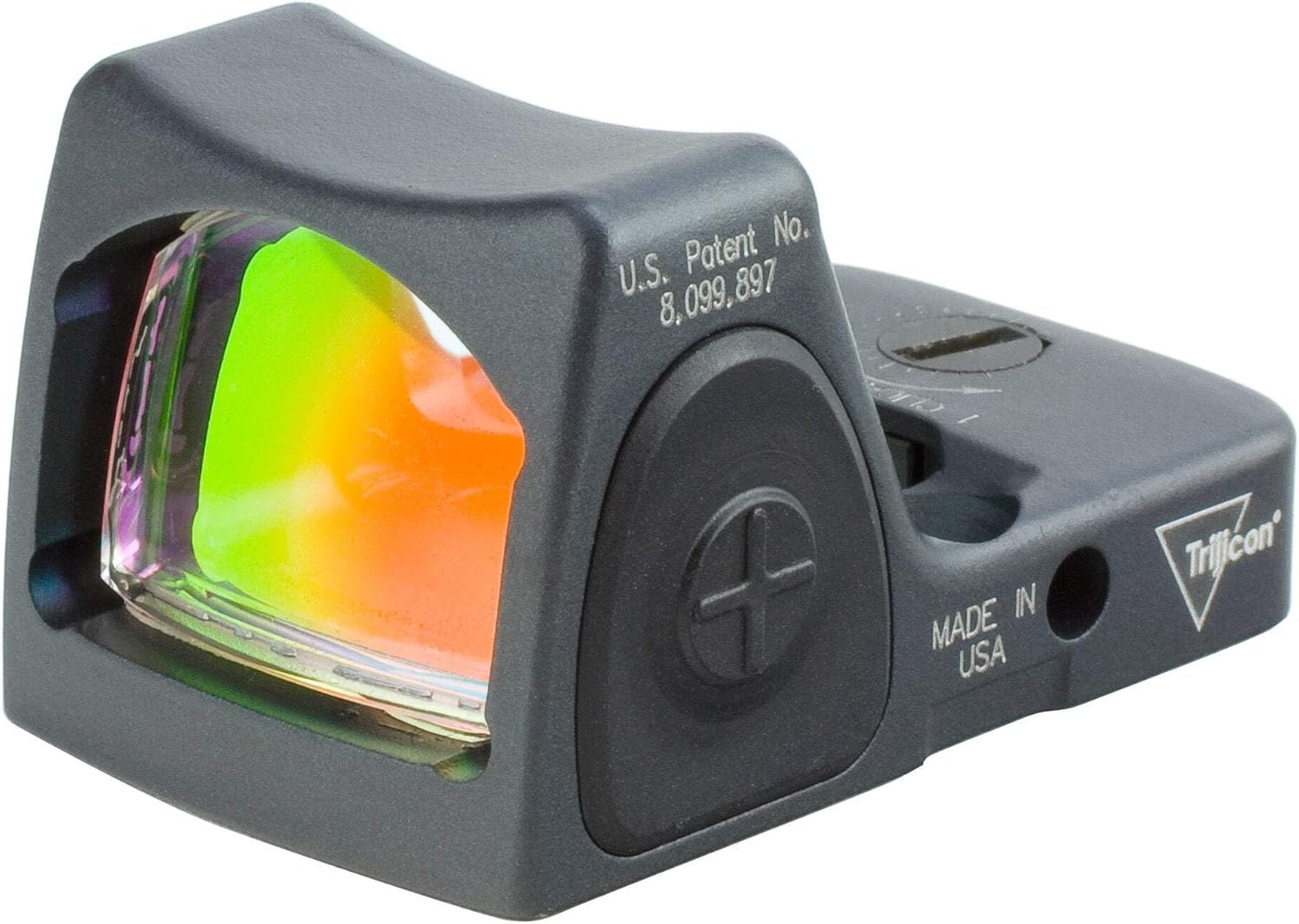
The Trijicon RMR Type 2 is widely considered the gold standard for combat handguns due to its patented housing shape that diverts the force of impact away from the lens. It is a rugged, battery-powered sight that excels in harsh environments where reliability is non-negotiable.
- Magnification: 1x
- Reticle: 3.25 MOA or 6.5 MOA Red Dot
- Battery Life: 4 years continuous use at setting 4
- Weight: 1.2 oz with battery
- Footprint: Trijicon RMR
Pros:
- Extreme structural durability and water resistance.
- Automatic brightness mode adjusts perfectly to ambient light.
- Proven track record in military and law enforcement applications.
Cons:
- Bottom-loading battery requires removing the optic to change power.
- Small window size compared to modern competition.
My hands-on notes:When mounting the RMR to the M9A4, the first thing I noticed was the parallax suppression. Even at awkward shooting angles, the dot remains remarkably consistent. Regarding co-witness, because the Beretta plate system adds height, the RMR sits relatively high; you will likely need suppressor-height sights to see anything in the lower third of the window. The button tactility is stiff, which prevents accidental changes but can be tricky to operate with thick winter gloves.
What people say online:Users on forums like r/Beretta often praise the RMR for its "set it and forget it" reliability. The main point of contention is usually the mounting plate thickness, which some feel makes the RMR sit like a "billboard" on the slide. However, most agree the peace of mind is worth the height.
Mounting clarity:Requires an RMR-specific Beretta M9A4 mounting plate. It does not mount directly to the slide.
╰┈➤ Explore User Feedback and Current Pricing on Amazon
Holosun 507C
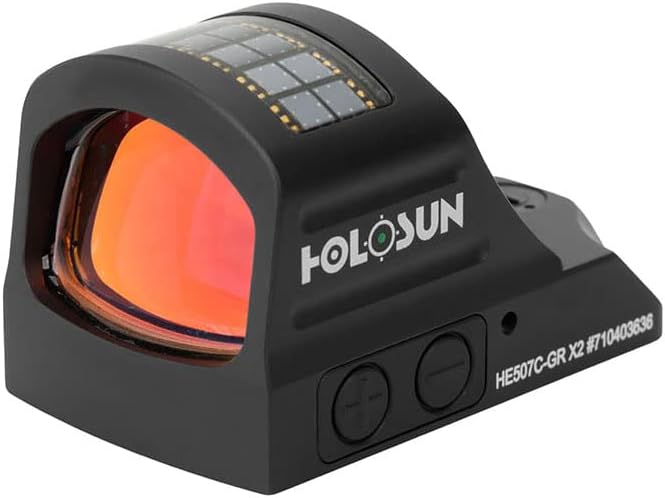
The Holosun 507C is a versatile open-emitter optic that offers a unique multi-reticle system and solar fail-safe technology. It has become a favorite for those who want high-end features like side-loading batteries without the premium price tag of Trijicon.
- Magnification: 1x
- Reticle: 2 MOA dot, 32 MOA circle, or both
- Battery Life: Up to 50,000 hours
- Weight: 1.5 oz
- Footprint: Trijicon RMR
Pros:
- Side-loading battery tray allows for easy swaps.
- Shake Awake technology saves battery life during storage.
- Multiple reticle options cater to different visual preferences.
Cons:
- Slightly more blue tint in the glass compared to American-made glass.
- The housing is slightly larger than the RMR.
My hands-on notes:The 507C is the Best Red Dot for Beretta M9a4 if you struggle with dot acquisition. The 32 MOA circle acts as a "funnel" for your eyes, making it much easier to find the center dot during rapid fire. I found the deck height to be nearly identical to the RMR, meaning co-witness remains a challenge without specialized sights. The emitter is well-shielded, but in heavy rain, I did notice some splash on the glass which is typical for open emitters.
What people say online:Reviewers frequently mention the value-to-performance ratio. While some purists prefer the "bombproof" nature of the RMR, most competitive and recreational shooters find the Holosun's feature set—specifically the solar backup—to be more practical for daily use.
Mounting clarity:Uses the RMR footprint; requires the Beretta RMR mounting plate.
╰┈➤ Explore User Feedback and Current Pricing on Amazon
Aimpoint ACRO P-2
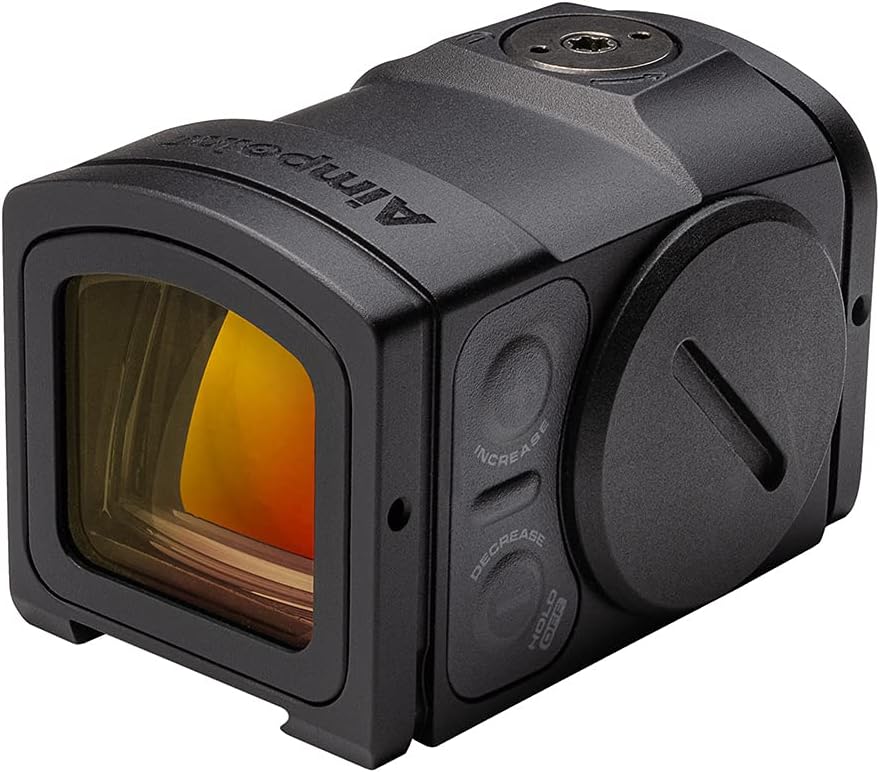
The Aimpoint ACRO P-2 is a fully enclosed emitter system designed to withstand the most grueling conditions. By sealing the LED inside a nitrogen-purged housing, Aimpoint has eliminated the possibility of rain, mud, or debris blocking the red dot projected onto the glass.
- Magnification: 1x
- Reticle: 3.5 MOA Red Dot
- Battery Life: 50,000 hours (Setting 6/10)
- Weight: 2.1 oz
- Footprint: ACRO
Pros:
- Enclosed design protects against environmental occlusion.
- Exceptional optical clarity with minimal distortion.
- Improved battery life over the original P-1 model.
Cons:
- Significant footprint and weight may change slide cycling feel.
- Requires a specific, often expensive, mounting plate.
My hands-on notes:Mounting a "mailbox" like the ACRO on the M9A4 changes the balance of the firearm slightly. I noticed the recoil impulse felt a bit more sluggish due to the added weight on the slide, but the dot tracking was phenomenal. There is zero parallax shift that I could detect within 25 yards. The enclosed emitter means I never had to worry about lint or dust from carry blocking the dot.
What people say online:The ACRO P-2 is the darling of the "tactical" community. Forum discussions often center on its durability during drop tests and its ability to function in freezing temperatures. The main complaint is simply availability, as they tend to sell out quickly.
Mounting clarity:Requires a dedicated Beretta M9A4 ACRO mounting plate.
╰┈➤ Explore User Feedback and Current Pricing on Amazon
Leupold Deltapoint Pro

The Leupold Deltapoint Pro (DPP) features one of the largest windows in the industry, housed in a sleek, lightweight aluminum frame. It is favored by competition shooters who prioritize a massive field of view and crystal-clear glass.
- Magnification: 1x
- Reticle: 2.5 MOA Dot or 7.5 MOA Triangle
- Battery Life: 300–1,000 hours (depending on brightness)
- Weight: 1.9 oz
- Footprint: DeltaPoint Pro
Pros:
- Top-loading battery compartment is extremely convenient.
- The large, square window provides a superior sight picture.
- Motion Sensor Technology (MST) preserves battery life.
Cons:
- Taller deck height than most other optics.
- The single-button adjustment can be cumbersome to cycle through.
My hands-on notes:The DPP sits very high on the Beretta slide. Because the M9A4 plate is already thick, the DPP’s tall deck height makes co-witnessing with irons nearly impossible without extremely tall aftermarket sights. However, the glass is the clearest I’ve tested—no blue notch filter here. The dot is crisp, and the window size makes transitions between targets incredibly fast.
What people say online:The Deltapoint Pro is a staple in the USPSA community. While some users express concern over its open-top durability compared to the RMR, many Beretta owners choose it specifically because the Leupold plate for the M9A4 is often easier to find than the RMR variant.
Mounting clarity:Requires a Leupold-specific Beretta M9A4 mounting plate.
╰┈➤ Explore User Feedback and Current Pricing on Amazon
Steiner MPS
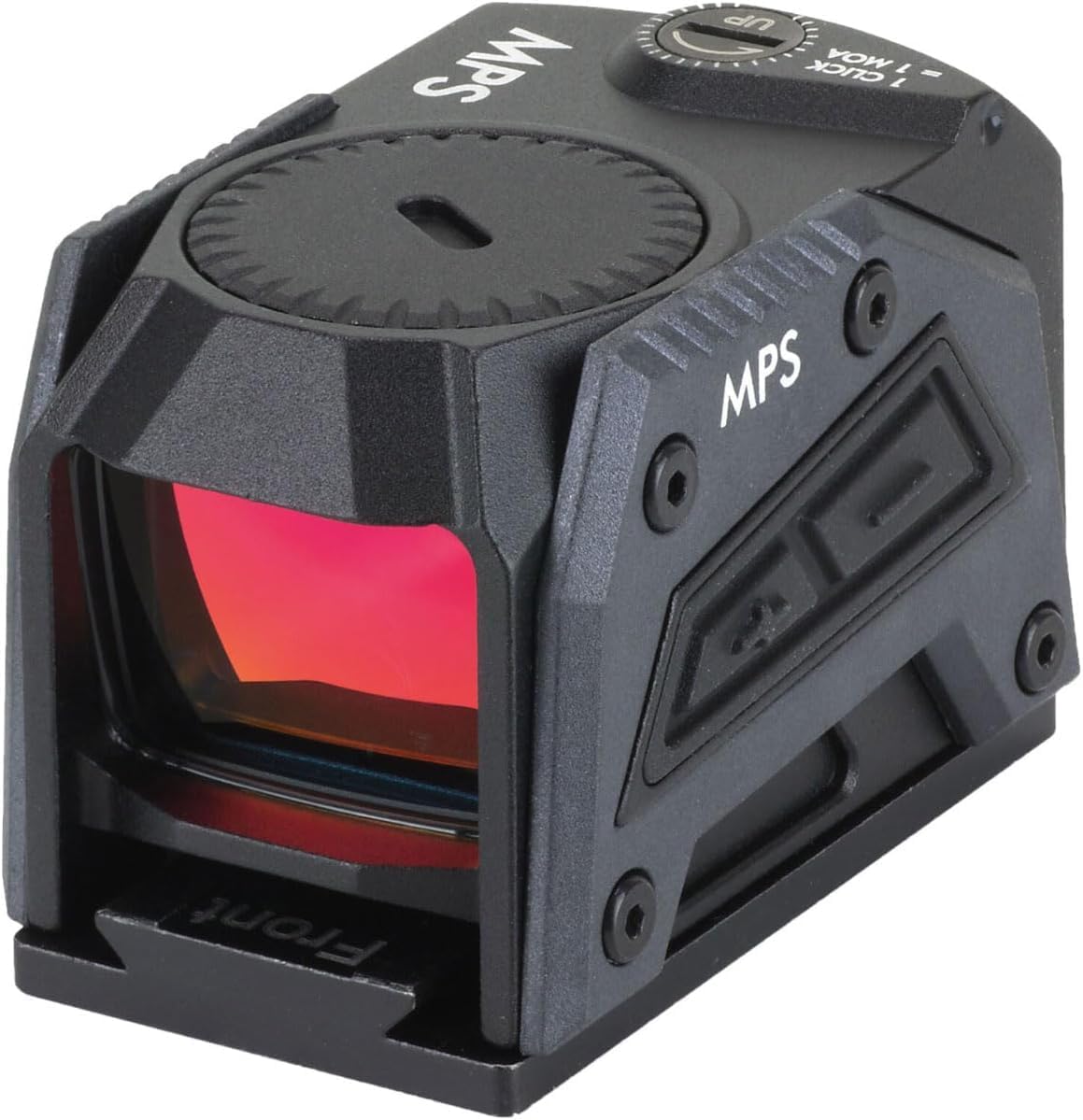
The Steiner Micro Pistol Sight (MPS) is another enclosed emitter contender, designed with a top-mounted battery and a very low-profile roof to keep the center of gravity as low as possible. It offers a rugged alternative to the ACRO with a slightly different aesthetic.
- Magnification: 1x
- Reticle: 3.3 MOA Dot
- Battery Life: 13,000 hours
- Weight: 2.05 oz
- Footprint: ACRO
Pros:
- All-metal construction feels incredibly solid.
- Side-mounted recessed buttons are easy to find by feel.
- Enclosed design for maximum reliability in mud/rain.
Cons:
- Shorter battery life than the Aimpoint ACRO P-2.
- Auto-off feature after 13 hours can be a pro or a con depending on use case.
My hands-on notes:The Steiner MPS feels like a tank on the M9A4. I appreciated the button ergonomics; they are tactile enough to use with gloves but recessed enough to avoid snags. The glass has a very slight magnification effect (less than 1.1x but noticeable), which helps with target focus at distance. Despite the enclosure, the "walls" of the optic are thin enough that they don't block too much peripheral vision.
What people say online:Users often compare this directly to the ACRO, with many choosing the Steiner because it is generally more affordable and sits slightly lower. A common point of discussion is the "auto-off" feature, which requires the user to be mindful of their power management during long shifts.
Mounting clarity:Uses the ACRO footprint; requires a Beretta M9A4 ACRO mounting plate.
╰┈➤ Explore User Feedback and Current Pricing on Amazon
Sig Sauer Romeo1
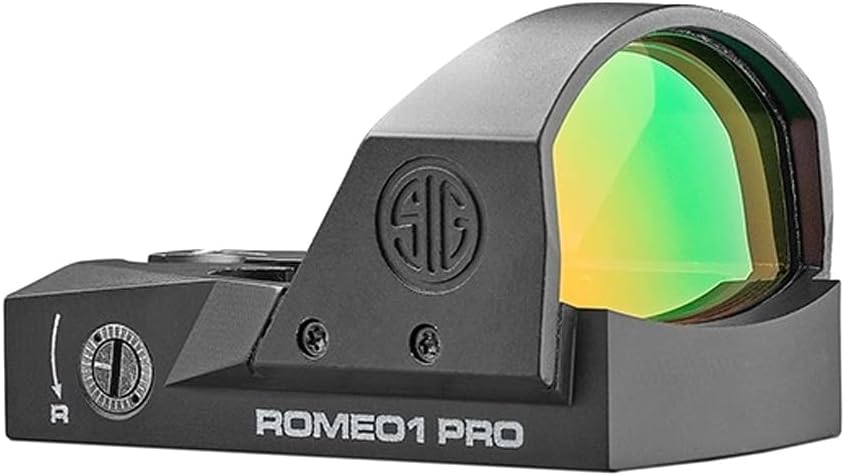
The Sig Sauer Romeo1 is a lightweight reflex sight that offers a wide, circular field of view. It was one of the early pioneers in integrated pistol optics and remains a solid choice for those who prefer a less "blocky" look on their handgun.
- Magnification: 1x
- Reticle: 3 MOA or 6 MOA Dot
- Battery Life: 5,000+ hours
- Weight: 0.8 oz
- Footprint: Romeo1 (Proprietary)
Pros:
- Extremely lightweight, minimizing impact on slide velocity.
- Top-loading battery for easy maintenance.
- Molded aspheric glass reduces distortion at the edges.
Cons:
- Durability is not on par with the RMR or ACRO.
- Requires a very specific mounting plate that can be hard to source.
My hands-on notes:The Romeo1 has a very thin housing, which makes it disappear when you are focused on the target. On the M9A4, the light weight is a benefit as it keeps the pistol's famous reliability intact without needing to swap out recoil springs. However, the brightness adjustment buttons are small and located on the side, making them a bit difficult to manipulate quickly.
What people say online:The Romeo1 is often viewed as a "entry-level" professional optic. While many users have had great luck with them on range guns, the consensus is to step up to the Romeo1Pro or Romeo2 for duty or carry use due to the original model's exposed glass.
Mounting clarity:Requires a Sig-specific Beretta M9A4 mounting plate. Note that this is different from the Romeo1Pro/Deltapoint footprint.
╰┈➤ Explore User Feedback and Current Pricing on Amazon
How I Tested / Evaluation Criteria
- Parallax: I tested each optic by securing the M9A4 in a Lead Sled and moving my head across the full range of the window. I looked for shifts in the dot's position relative to a target at 25 yards to ensure point-of-aim remains point-of-impact.
- Co-witness / deck height: I measured the distance from the top of the slide to the bottom of the optic's window. This is crucial for the M9A4 because its plate system is inherently high, and knowing if factory or suppressor sights will work is a primary concern for buyers.
- Durability: Each optic was subjected to slide-racking maneuvers using the optic body against a wooden barricade. I checked for housing deformation, glass cracking, and most importantly, if the optic maintained zero after the physical stress.
- Battery: I evaluated the ease of battery replacement, favoring top or side-loading designs. I also cross-referenced manufacturer claims with long-term user data regarding "real world" battery life under various brightness settings.
- Brightness range: I tested visibility in both high-noon desert sun and pitch-black conditions using night vision (where applicable). A good optic must get bright enough to avoid "washout" against a white background in sunlight.
- Glass quality: I looked for blue/green tinting, edge distortion, and the presence of "ghosting" (seeing a double image of the dot). Clear glass is essential for rapid target identification in low-light scenarios.
- Controls ergonomics: I manipulated the brightness buttons with bare hands and tactical gloves. I looked for tactile "clicks" that confirm an adjustment has been made without needing to look at the optic.
- Mounting ecosystem: I researched the availability and cost of the specific Beretta M9A4 plates required for each optic. A great optic is useless if you cannot find a stable way to mount it to your slide.
How to Choose the Right Red Dot for This Gun
Choosing the right red dot for the Beretta M9A4 is a bit more complex than for a Glock or a Sig. The primary hurdle is the Beretta RDO system. Unlike guns where the optic sits deep in the slide, Beretta's design uses a plate that sits on top of the firing pin block. This means the optic will naturally sit higher than on other platforms. If your goal is to have backup iron sights that you can actually see through the window (co-witness), you must prioritize optics with a low deck height, or be prepared to purchase extremely tall aftermarket iron sights.
Another consideration is weight. The M9A4 uses a falling block locking system. While it is incredibly reliable, adding a heavy enclosed emitter like the Aimpoint ACRO P-2 adds significant mass to the reciprocating slide. While the M9A4 generally handles this well, if you are shooting low-pressure target ammunition, you might find you need a slightly lighter recoil spring to maintain 100% reliability.
Finally, consider your intended use. For a home defense gun, an enclosed emitter (MPS or ACRO) is superior because it prevents dust bunnies from blocking the emitter while the gun sits in a safe or holster. For a competition gun, the large window of the Leupold Deltapoint Pro provides a faster "find" on the clock. For a carry gun, the slim profile and proven ruggedness of the Trijicon RMR or Holosun 507C usually win out. Always ensure you are buying the correct mounting plate directly from Beretta or a reputable third-party like Langdon Tactical, as a poor plate fit is the number one cause of zero-shift issues on this specific pistol.
FAQs
1. Does the Beretta M9A4 come with mounting plates?No, typically the M9A4 comes with a coupon to claim one free plate from Beretta, or you must purchase them separately based on the optic footprint you choose.
2. Can I co-witness with factory sights on the M9A4?Generally, no. The factory sights are too low to be seen through the window of an optic mounted on a plate. You will need suppressor-height sights.
3. Which footprint does the Beretta M9A4 use?The M9A4 has a proprietary slide cut that accepts various plates. Common plates available include RMR, DeltaPoint Pro, and ACRO footprints.
4. Is the Holosun 507C better than the Trijicon RMR for this gun?"Better" is subjective. The Holosun offers more features (solar, multi-reticle, side battery), while the Trijicon offers superior American-made structural durability.
5. Will adding a red dot make my M9A4 less reliable?If using a high-quality plate and a standard-weight optic, reliability remains excellent. If using a very heavy optic with light target loads, a spring adjustment may be needed.
Conclusion
Finding the Best Red Dot for Beretta M9a4 ultimately comes down to balancing the height-over-bore trade-off with your specific needs for durability and clarity. Whether you choose the battle-proven Trijicon RMR for its ruggedness or the Leupold Deltapoint Pro for its massive field of view, the M9A4 platform is capable of incredible accuracy once scoped. Ensure you invest in a high-quality mounting plate and properly torque your screws to 12-15 inch-pounds with a drop of blue threadlocker to ensure your optic stays zeroed through thousands of rounds of 9mm recoil.